Wayfinding in a Healthcare System

The Problem
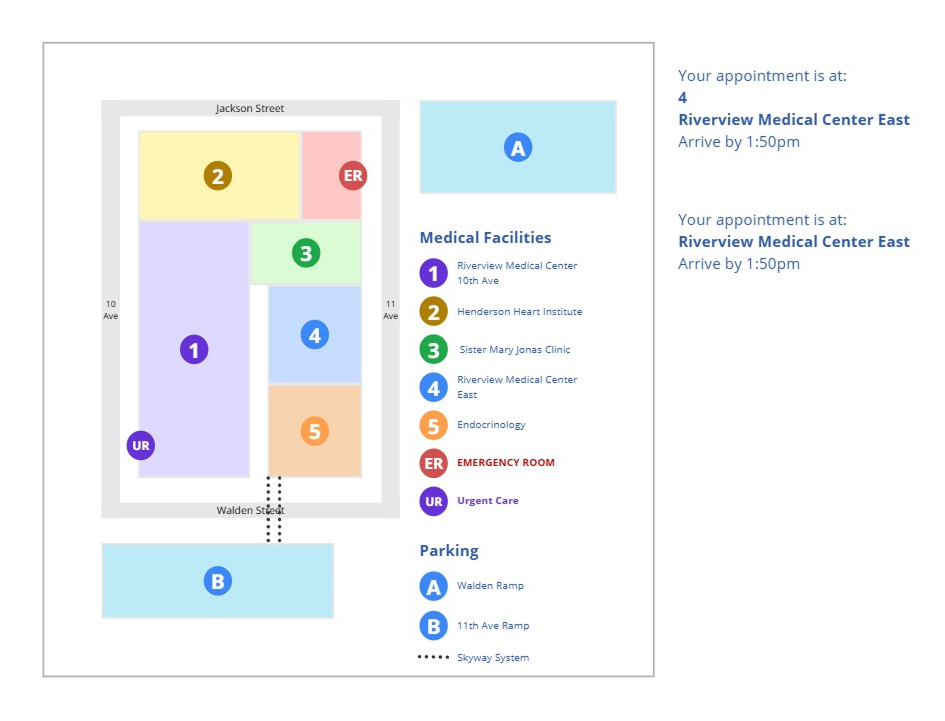
Visitors experiencing difficulty in navigating the multi-building healthcare campus in downtown Duluth due to a lack of clear wayfinding in both physical and digital communication
The Work
Partnered with a 3rd party Design Agency to assess the current state of the wayfinding system applied to the campus and collaborated with them to develop a new methodology
The Team
Cross-functional team with stakeholders from Marketing & Communication, Legal/Compliance, Patient Experience and Facilities in addition to our partner Design Agency
Methods
Analysis of Current State
User Research - Google Reviews + Happy-or-Not reports
Patient & Visitor Focus Group
Mock Campus System for Testing
Concept Design for building entry
Analysis
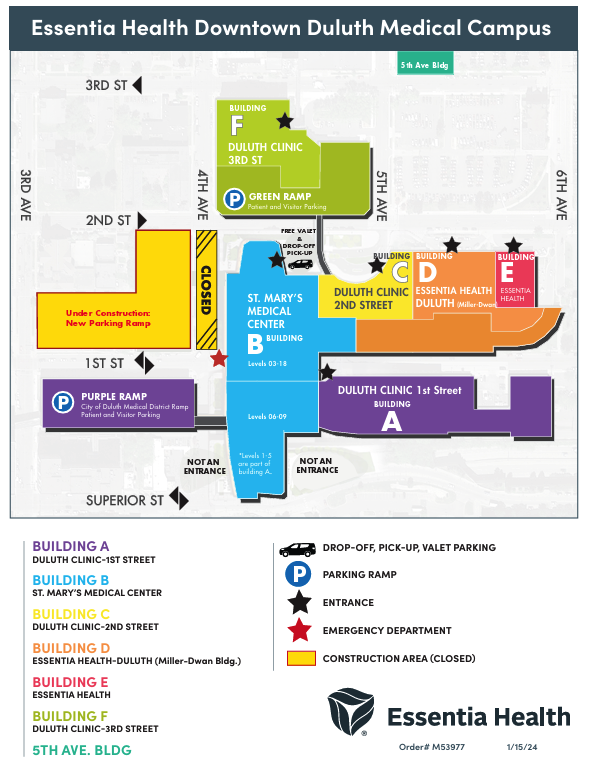
Campus Map
Lack of Hierarchy: building names and building letters are inter-changeable; it is unclear which is the most important
Repetition & Cognitive Load: several words/names are repeated, forcing users to read all words and causing extra cognitive load
Context: surrounding streets are too light and don’t show enough contrast to clearly identify the streets
Communication
Lack of Adoption: Essentia employees have not adopted the A-F building names, and continue to use the legacy building names
Lack of Consistency: patients have no consistent messaging to guide them to their appointments. Messages in MyChart differ from text message reminders, giving no consistency to patients
A Critique of Naming in Wayfinding
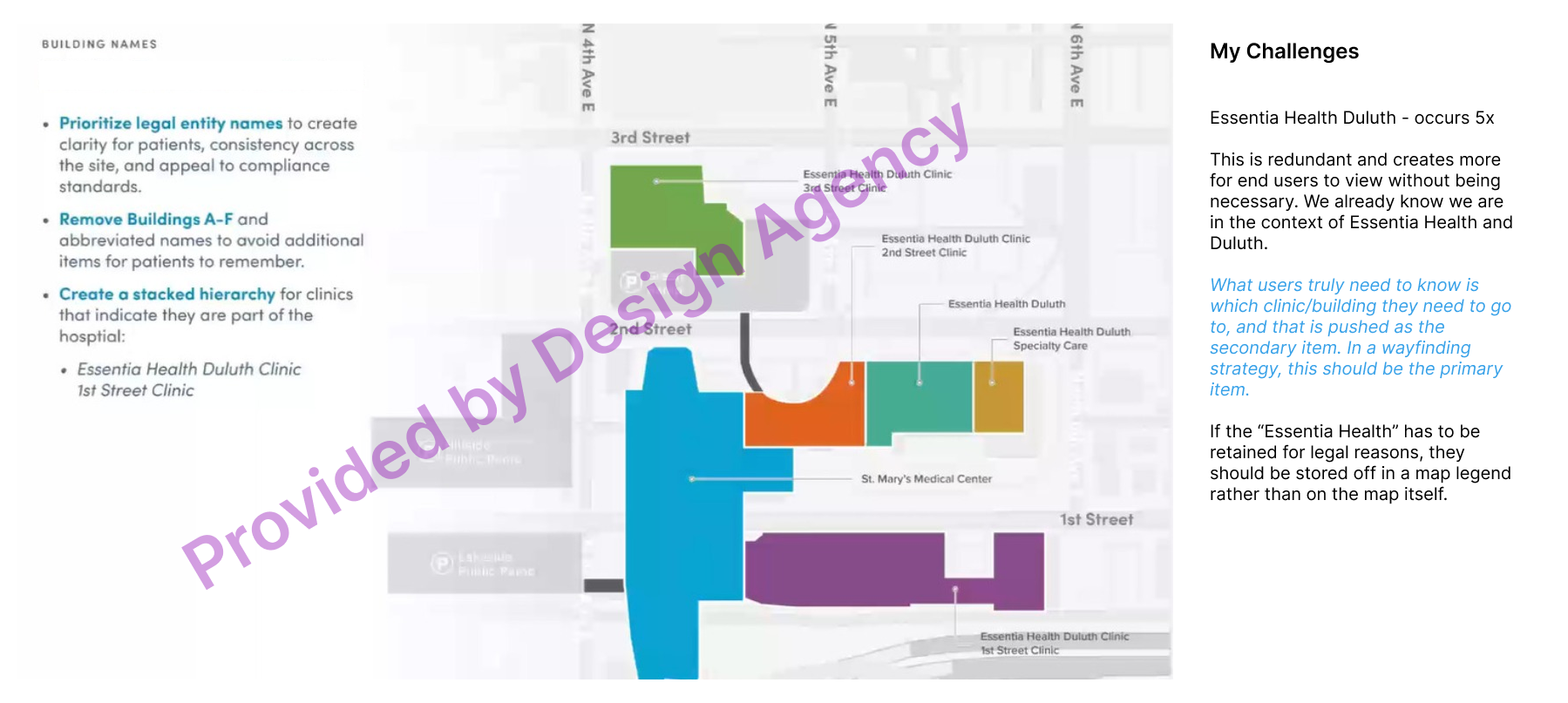
The Design Agency provided a simplified map for the healthcare campus. However, this map still included elements that increase cognitive load for users and are redundant in the context of the Essentia Healthcare environment.
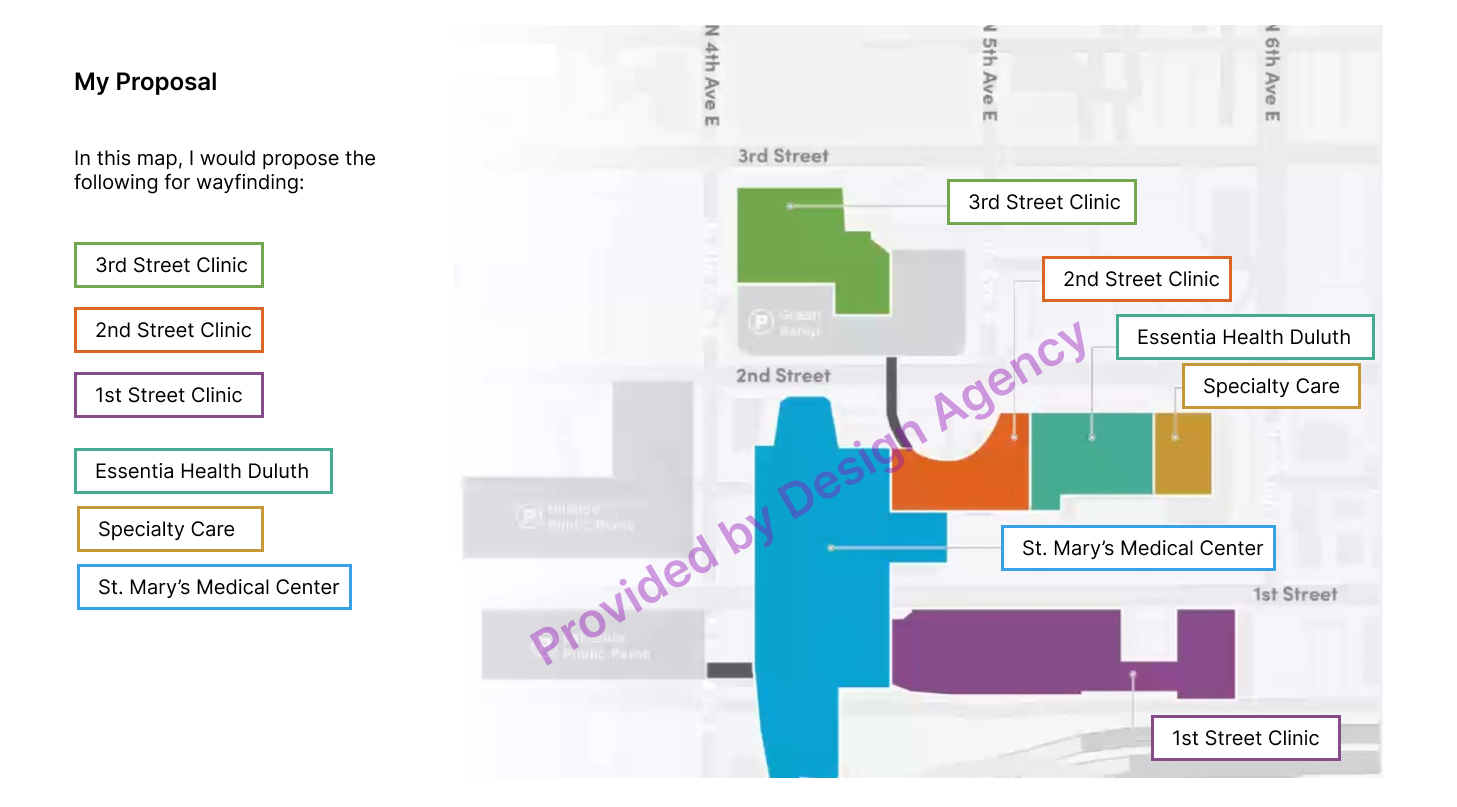
While a wayfinding strategy does need to include the legal names, I’m of the opinion that it can be done in a way that better serves the end users and patients. The wayfinding strategy should promote a hierarchy of information that benefits users and doesn’t obscure the information that is the most important to them.
An Alternative Approach:
2. User Research
Feedback from patients and visitors
Direct feedback from users was gathered through a mix of the Happy-or-Not reports provided by Essentia Health as well as conducting research on Google Reviews. Feedback ranged in frustration from not knowing where to go to wishing that check-in was functional.
“Went to wrong department”
“Would be nice to know which building ahead of appointment”
3. Patient & Visitor Focus Group
Essentia Health has a Patient & Visitor Focus Group of 6-12 individuals who provide feedback on a variety of projects that impact visitors and patients.
Several participants from the Wayfinding Initiative project joined a meeting to review items with the Focus Group, including the Design Agency who facilitated the discussion with the group and provided questions.
I had optimism for this engagement and hoped to offer my own user-specific research questions in the effort to truly get unbiased opinions from the group, but was left very disappointed by how the session was conducted.
A question given from the Design Agency to the Focus Group
This is not a good research question.
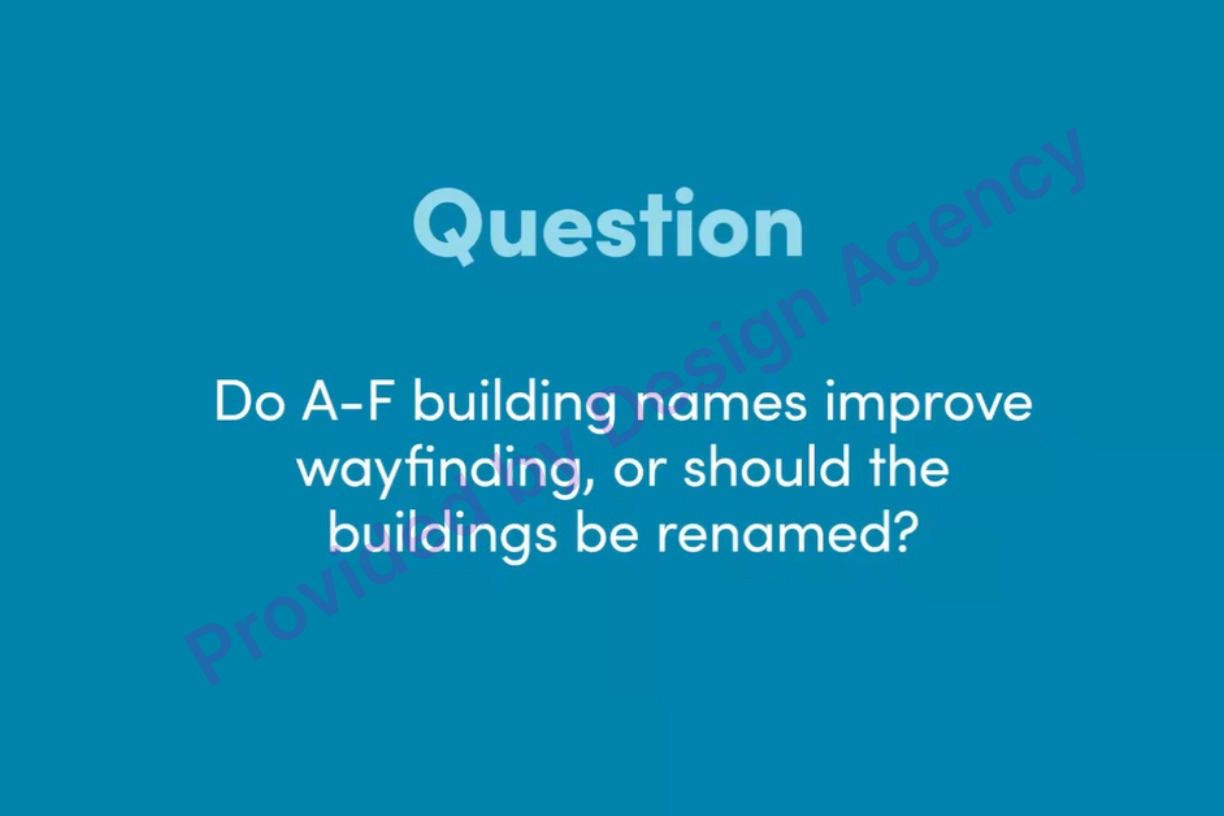
This is a leading question that does not encourage participants to offer their own opinions on a subject.
Instead, this question directs participants to answer in a way that validates those asking the questions rather than truly examining what end users think or feel.
Seeing this as the direction of the Patient & Visitor Focus Group was disheartening from a UX Research standpoint, as the questions were not focused on examining and understanding how users think about wayfinding or experience it. This felt like a lost opportunity. Nonetheless, I gathered what insights I could, and particularly listened for any statements that pointed towards how users felt.
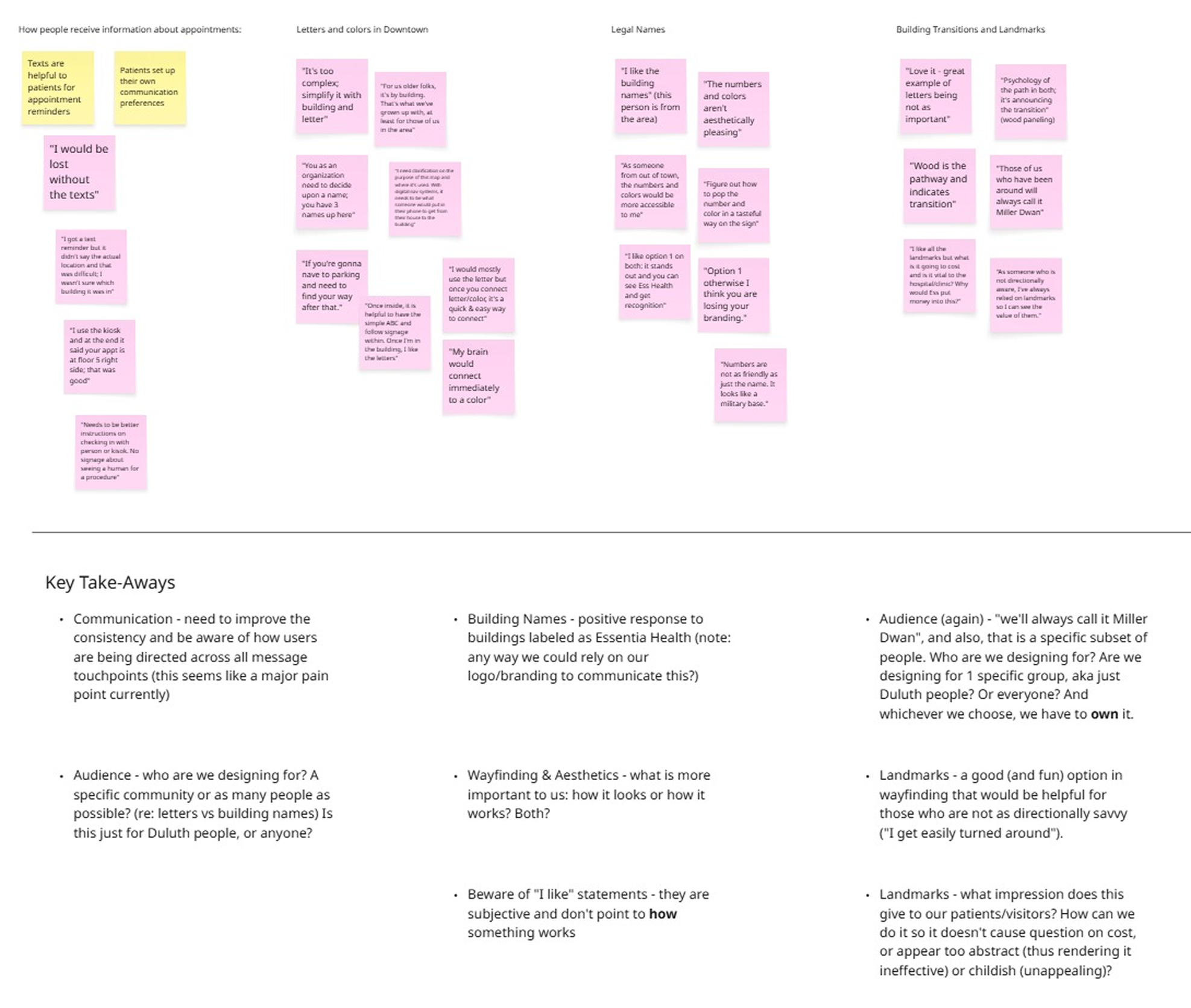
4. Mock Campus Map for Testing
An Exercise in Testing a Wayfinding Strategy
Letters, Numbers, Names